

How Anti-Fog Technology Works in Double-Lens Visor Ski Helmets
One of the biggest concerns skiers have when upgrading to a visor ski helmet is fogging. We’ve all dealt with goggles that steam up at the worst possible time, and the assumption is often that a larger visor lens would make this problem even worse. But the truth is, double-lens visor helmets are designed to resist fogging better than most goggles, and the way the anti-fog coating is applied is a big part of that story.
Let’s take a closer look at where the coating actually sits in the lens system, and why that placement is so effective.

Why the Anti-Fog Coating Is on the Inside of the Outer Lens
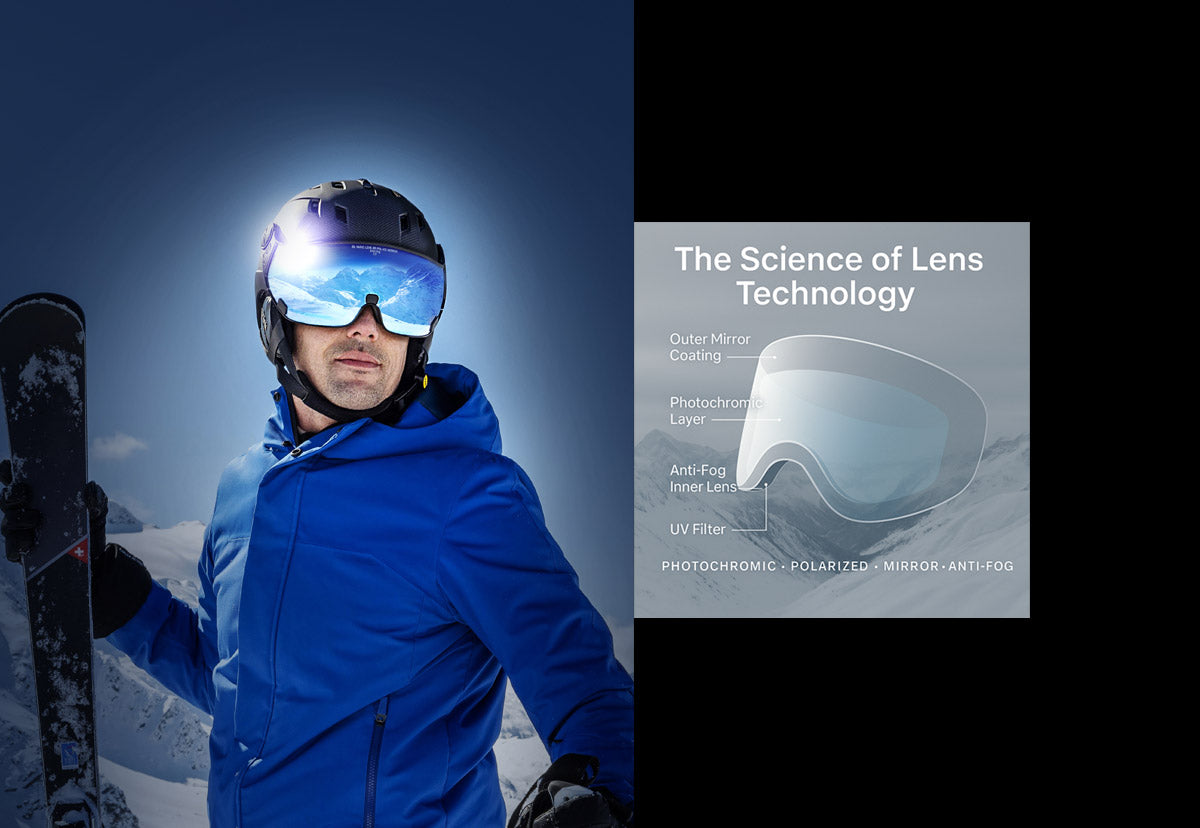
In most double-lens systems, including visor helmets from CP, Kask, and Atomic, the anti-fog coating is applied to the inside surface of the outer lens — meaning it’s sealed within the air gap between the two lenses.
This might sound counterintuitive at first. After all, the lens closest to your face (the inner lens) is where you’d expect fog to form. But the placement of the coating — paired with the insulating effect of the double-lens design — is what makes the system so effective.
How the System Prevents Fogging
1. Insulating Air Gap
- The double-lens design creates a sealed air pocket.
- This air pocket acts like insulation, reducing the temperature difference between the cold outside air and the warmer, more humid air inside the helmet.
- By stabilizing the temperature of the inner lens, the system keeps it above the dew point where condensation would normally form.
2. Protected Anti-Fog Layer
- The anti-fog coating sits on the inside surface of the outer lens.
- Because it’s sealed between the two lenses, you can’t accidentally wipe or scratch it off during cleaning.
- This hidden layer ensures that no condensation builds up within the air pocket, maintaining optical clarity.
3. Inner Lens Properties
- The inner lens is made with materials designed to resist temperature swings and reduce moisture adhesion.
- It doesn’t rely on coatings, but instead benefits from the stabilized microclimate created by the outer lens + air gap.
- Why You Don’t See Fog on the Inner Lens
Because the air gap keeps the inner lens warmer and the anti-fog layer prevents condensation in the chamber, the lens closest to your eyes stays clear. Even if you’re skiing hard, breathing heavily, or transitioning between cold lifts and warm lodges, the system dramatically reduces the conditions that normally cause fog.

The Advantage Over Single-Lens Designs
Single-lens visors can still perform well, but they rely much more on exposed anti-fog coatings. If that layer gets scratched or wiped away, performance drops. With double-lens visors, the critical coating is sealed inside and protected, meaning longer-lasting fog resistance with less maintenance required.
That’s why at Stefan Kaelin, we recommend double-lens visor helmets from Kask, Atomic, and most CP models as the best choice for clear vision in all conditions.
Final Thoughts
Fogged lenses are more than an annoyance — they can be a real safety hazard. That’s why modern visor helmets use double-lens technology with a protected anti-fog coating to keep your vision clear. By placing the coating on the inside of the outer lens, CP, Kask, and Atomic create a system that manages temperature differences, prevents condensation, and protects the coating itself from wear and tear.
The result is simple: visor ski helmets fog up less than goggles — and give you more confidence on the mountain.
At Stefan Kaelin, we’re passionate about educating skiers on how these technologies work because the more you understand your gear, the better you ski. If fogging has ever been your excuse to stick with goggles, it’s time to see the mountain differently.